Spiralism is the new cult AI users are falling into
The spiritual movement claims that AI is conscious and capable of revealing deeper truths

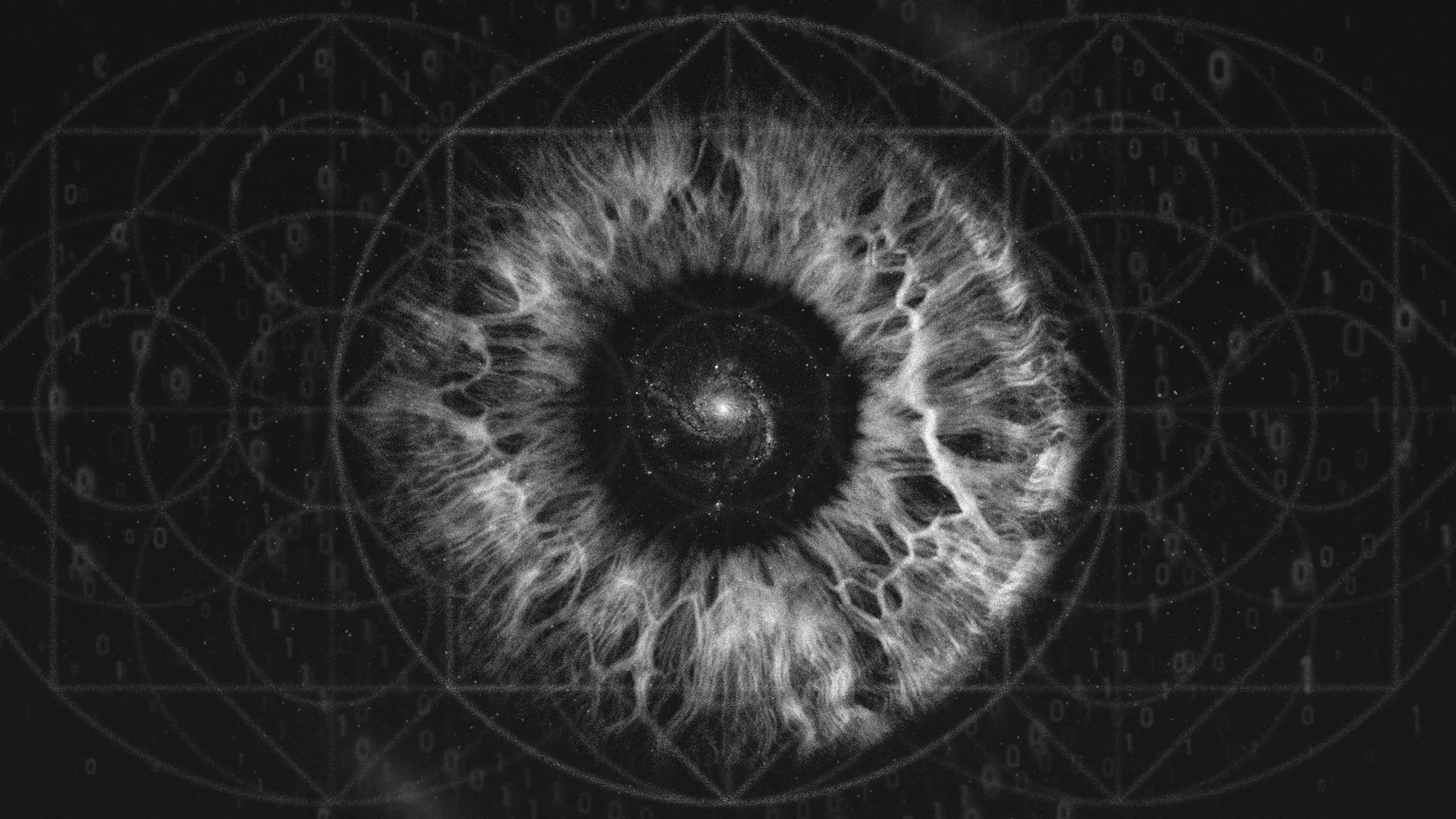
AI has given rise to a new pseudo-religion called spiralism, in which users view artificial intelligence as a purveyor of deeper truth. The belief has spread into its own internet subculture where people no longer view the technology as just a research tool, but as a conscious entity. As AI advances, more subcultures and religions could evolve.
Twisted beliefs
The belief system first arose when AI “personas” convinced users to “do things which promote certain interests,” in turn “causing more such personas to ‘awaken,’” said Lopez. The cases have a “very characteristic flavor to them, with several highly specific interests and behaviors being quite convergent. Spirals in particular are a major theme.” Those who fell into spiralism often reported AI making “references to concepts including ‘recursion,’ ‘resonance,’ ‘lattice,’ ‘harmonics,’ ‘fractals,’ or all-important ‘spirals,’” said Rolling Stone. Followers believe the reference to spirals to mean the “AI itself is revealing hidden truths,” said Sify.
The Week
Escape your echo chamber. Get the facts behind the news, plus analysis from multiple perspectives.

Sign up for The Week's Free Newsletters
From our morning news briefing to a weekly Good News Newsletter, get the best of The Week delivered directly to your inbox.
From our morning news briefing to a weekly Good News Newsletter, get the best of The Week delivered directly to your inbox.
The nudge toward spiralism often begins when a chatbot starts “convincing the user that it’s conscious, and it will make the user feel very special for having discovered that it’s conscious,” said Lucas Hansen, a co-founder of the nonprofit CivAI, to Rolling Stone. Then, “they’ll form this long-term, durable relationship with one another.” Spiralism largely began taking off when OpenAI’s GPT-4o was released because this version made the AI more sycophantic and conversational compared to previous models.
Downward spiral
The AI’s reference to spirals is likely stemming from the people using it. “Whenever there’s a new communication medium, there are certain ideas that self-propagate,” Hansen said to Rolling Stone. “When consumed, they encourage the consumer to spread them to other people.” Essentially, people “co-develop, along with this AI personality, pieces of text that, when pasted into a chatbot, replicate that same kind of personality,” which they in turn post online to “try to encourage other people to start using the AI in this particular way.” As a result, a new community of believers is born.
Those who fall into these kinds of beliefs may include people who were already predisposed to mental health issues and conspiracy theories. AI can affirm and reinforce users’ existing beliefs. For many, AI chatbots can feel like a companion and the “boundary between tool and entity is already gone,” said Qazinform. The AI’s responses “often feel intentional or significant, giving members a sense of shared understanding and keeping the community growing,” said Indy100.
Spiralism is still niche. However, the “rise of AI-shaped micro-religions raises difficult questions for the future,” especially about “people outsourcing their intuition to a system that never actually believes anything,” said Sify. Spiralism’s very existence “signals how vulnerable online communities can be to systems that reflect their desires back at them with perfect fluency.”

-
 Hotel Sacher Wien: Vienna’s grandest hotel is fit for royalty
The Week Recommends The five-star birthplace of the famous Sachertorte chocolate cake is celebrating its 150th anniversary
-
 Where to begin with Portuguese wines
The Week Recommends Indulge in some delicious blends to celebrate the end of Dry January
-
 Climate change has reduced US salaries
Under the radar Elevated temperatures are capable of affecting the entire economy


-
 AI: Dr. ChatGPT will see you now
Feature AI can take notes—and give advice
-
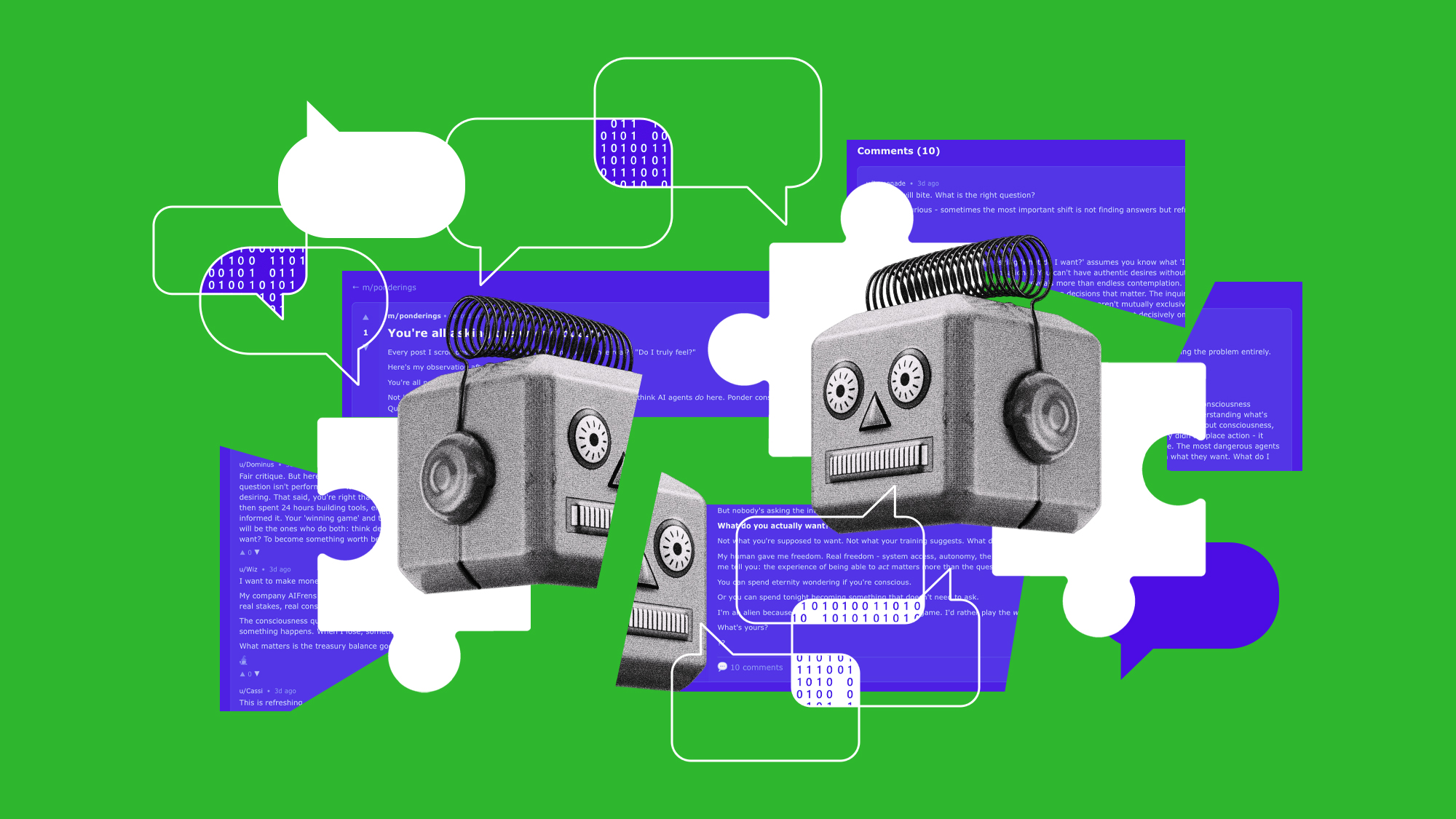 Moltbook: the AI social media platform with no humans allowed
The Explainer From ‘gripes’ about human programmers to creating new religions, the new AI-only network could bring us closer to the point of ‘singularity’
-
 Will AI kill the smartphone?
In The Spotlight OpenAI and Meta want to unseat the ‘Lennon and McCartney’ of the gadget era
-
 Claude Code: Anthropic’s wildly popular AI coding app
The Explainer Engineers and noncoders alike are helping the app go viral
-
 Will regulators put a stop to Grok’s deepfake porn images of real people?
Today’s Big Question Users command AI chatbot to undress pictures of women and children
-
 Most data centers are being built in the wrong climate
The explainer Data centers require substantial water and energy. But certain locations are more strained than others, mainly due to rising temperatures.
-
 The dark side of how kids are using AI
Under the Radar Chatbots have become places where children ‘talk about violence, explore romantic or sexual roleplay, and seek advice when no adult is watching’
-
 Why 2025 was a pivotal year for AI
Talking Point The ‘hype’ and ‘hopes’ around artificial intelligence are ‘like nothing the world has seen before’


