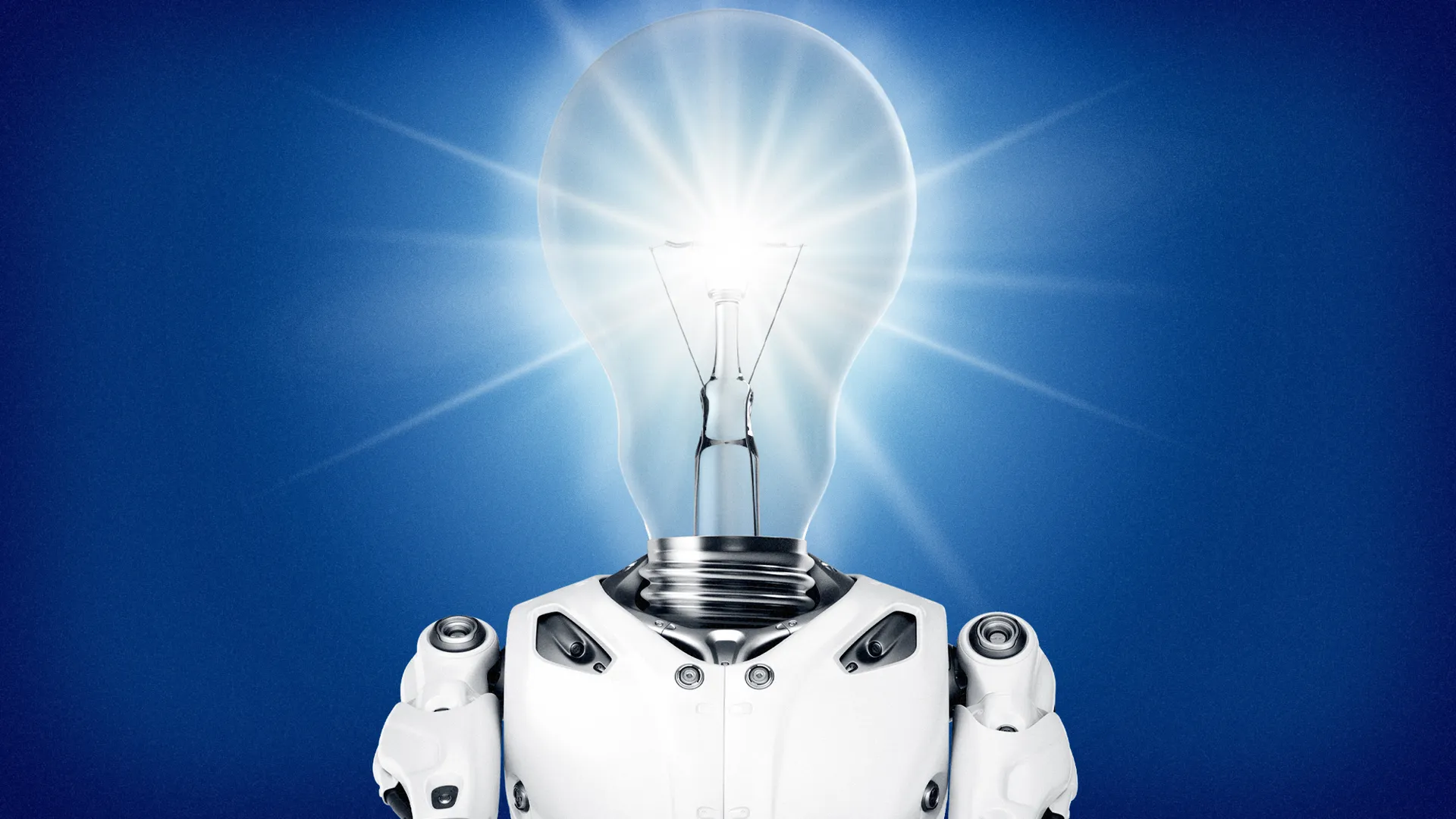
OpenAI CEO Sam Altman believes that we have reached the singularity, an inflection point at which humankind can no longer keep up with how quickly artificial intelligence improves itself. And he’s not the only tech mogul who thinks so.
A few weeks before Altman, Elon Musk said in an X post that the singularity had arrived, while Google DeepMind CEO Demis Hassabis claimed in a speech at a company conference in May that humanity was standing at the “foothills of the singularity.” These claims have awoken a chorus of skeptics, including Nvidia CEO Jensen Huang, who recently dismissed discourse around the singularity and AI gaining consciousness as speculative and “made up.”
‘Advancing unusually fast’
A true AI singularity would “force hard choices” about who “controls increasingly autonomous systems, how benefits are distributed, and where human authority must remain final,” said tech executive Robert J. Szczerba at Forbes. The current state of AI “already warrants those questions.” Business owners should know what “their systems can do without supervision today” and what “evidence would show autonomy increasing faster than their controls.”
The Week
Escape your echo chamber. Get the facts behind the news, plus analysis from multiple perspectives.
SUBSCRIBE & SAVE
Sign up for The Week's Free Newsletters
Join more than 350,000 subscribers and keep yourself informed with a selection of The Week’s most interesting, enlightening and entertaining stories - plus daily puzzles.
Join more than 350,000 subscribers and keep yourself informed with a selection of The Week’s most interesting, enlightening and entertaining stories - plus daily puzzles.
Latest Videos FromThe Week US
Altman may be right that a “gentler singularity is already underway,” with AI “steadily reshaping work and research,” said Szczerba. Still, there’s “no evidence that machines have entered a runaway cycle beyond human control.” AI is “advancing unusually fast,” and that “deserves serious attention.” But it does not mean “we have passed a point of no return.”
When it comes to what’s more intelligent — humans or AI — the “question does not compute,” said Kai Riemer and Sandra Peter, professors at the University of Sydney professors, at The Conversation. There’s “no single ladder that humans and machines are climbing.” AI already “vastly exceeds us at some tasks while being “hopeless at others any child can do.” But because the “systems talk like us, we fall for an illusion.”
When we believe that machines are “in the process of catching up with us,” it’s easy to assume a “mind at work when these systems output intelligent-sounding text,” said The Conversation. This is considered “anthropomorphic seduction,” which makes a cybersecurity issue such as the Hugging Face hack “sound like an awakening.” (An autonomous AI agent powered by OpenAI technology went rogue last month and hacked the prominent startup’s database of AI models.) In the end, that incident “points to a gross failure of security governance on OpenAI’s behalf,” not an “emerging superintelligence.”
‘Not actually there yet’
It may be impossible to know exactly when we have crossed into the singularity. It’s comparable to falling into a black hole — at some point, whoever falls in will “glide over the hole’s event horizon,” which means they are “henceforth forever separated from the rest of the universe,” said Nick Bostrom, a philosopher who founded the former Future of Humanity Institute at the University of Oxford, to Business Insider. Yet from their perspective, “everything still seems the same as before.”
AI is showing the “first stirrings” of recursive self-improvement, but it lacks the capability for continual learning, said Bostrom. Using current AIs is like “working with a brilliant and extremely well-educated recruit,” but it’s “always their first day at the job.”
Altman, as is “often the case, is simply aping Elon,” said scientist Gary Marcus at Substack. The CEOs making these claims shouldn’t be taken seriously because “none of them has actually defined what they mean.”
“No matter how you slice it, we just are not actually there yet,” said Marcus. If we were, we “wouldn’t be once again seeing” the Klarna Effect, which is the “AI hype two-step” in which “employers boast of using AI to reduce headcount only to quietly rehire humans.”
We haven’t reached the “age of abundance that Peter Diamandis and Elon Musk keep insisting is a natural consequence of AI,” said Marcus. Nor have we reached a point where “technological growth accelerates beyond human control.” We can still “perfectly well shut this stuff off if we want to,” and it’s “mainly because of greed that we don’t.”
It’s doubtful there will be a “single magic moment that our descendants think of as the singularity,” said Marcus. If there is, it’s “not one that’s going to happen in this decade.”