Why is Trump threatening defense firms?
CEO pay and stock buybacks will be restricted

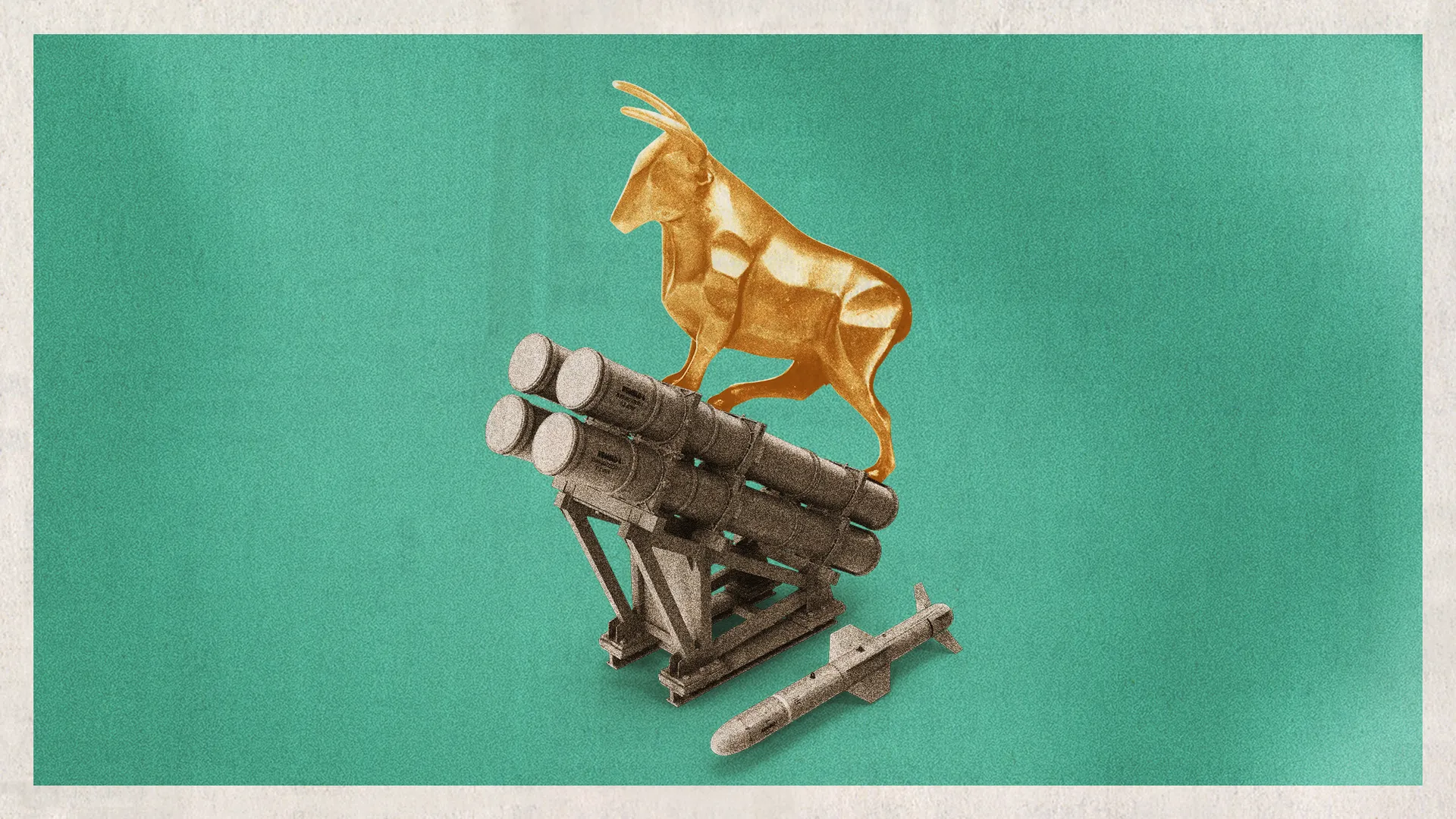
President Donald Trump giveth to defense contractors and he also taketh away. Trump says he wants a major boost in defense spending, which contractors undoubtedly welcome. But he has also ordered a crackdown on executive pay and stock buybacks at the companies that make armaments for the United States.
Trump’s financial threat against defense firms came just “hours before saying he’s decided to substantially increase the defense budget” to $1.5 trillion, said CNN. The U.S. makes the “best military equipment in the world,” the president said in a Truth Social post. But the taxpayer cash that ends up going to defense company stock buybacks comes at the “expense and detriment of investing in plants and equipment.” No executive at those firms should make more than $5 million a year, he said.
Those comments “reverberated” through companies like Boeing, Raytheon, General Dynamics, Lockheed Martin and Northrop Grumman, said CNN. Trump’s order is an “extraordinary, unprecedented act of state capitalism,” said Steven Grundman, a former deputy undersecretary of defense.
The Week
Escape your echo chamber. Get the facts behind the news, plus analysis from multiple perspectives.

Sign up for The Week's Free Newsletters
From our morning news briefing to a weekly Good News Newsletter, get the best of The Week delivered directly to your inbox.
From our morning news briefing to a weekly Good News Newsletter, get the best of The Week delivered directly to your inbox.
A wartime footing?
“Patience in the White House appears to be running out” with contractors who are struggling to “ramp up production of key munitions,” said The Telegraph. A think tank report predicted that U.S. anti-ship missiles would run out in under a week during any war with China. That has raised Pentagon fears that America “may struggle to produce a host of weapons faster than it consumes them.” The challenge is compounded by the fact that the U.S. is “no longer the manufacturing powerhouse it once was.”
Trump’s message to contractors is that there “might be a lot more money coming, but only if you deliver,” said Ryan Pickrell at Business Insider. That is a “clear signal” the White House “intends to at least try to tell weapons makers how to run their businesses,” stemming from a sense that “America’s defense sector has slipped.” Now the Pentagon and the president are moving to put industry on a “wartime footing” by favoring “speed and execution over process.”
“Defense CEOs get paid a lot,” said Barron’s. Northrop Grumman CEO Kathy Warden, for example, received total compensation of $24.4 million in 2024. The government’s status as the defense industry’s “biggest customer” gives it substantial leverage to put conditions on that pay. The Defense Department has “every right to try to incentivize companies to speed up deliveries and production” of U.S. arms, said Kevin Murphy, the vice dean of faculty and academic affairs at USC Marshall School of Business, to Barron’s.
A market risk
Trump’s “selective state capitalism” is setting a “dangerous precedent,” said Doug Kass at The Street. His intervention in defense contractor finances, paired with announced limits on home purchases by institutional investors, is creating an “underappreciated market risk.” Trump’s latest policy announcements are “not market friendly.”
Reining in defense contractors is “one issue where Democrats think Trump is right,” said Politico. Big arms firms have “done extraordinarily well,” said Sen. Jack Reed (D-R.I.), and “yet we’re behind in so many different systems.”
