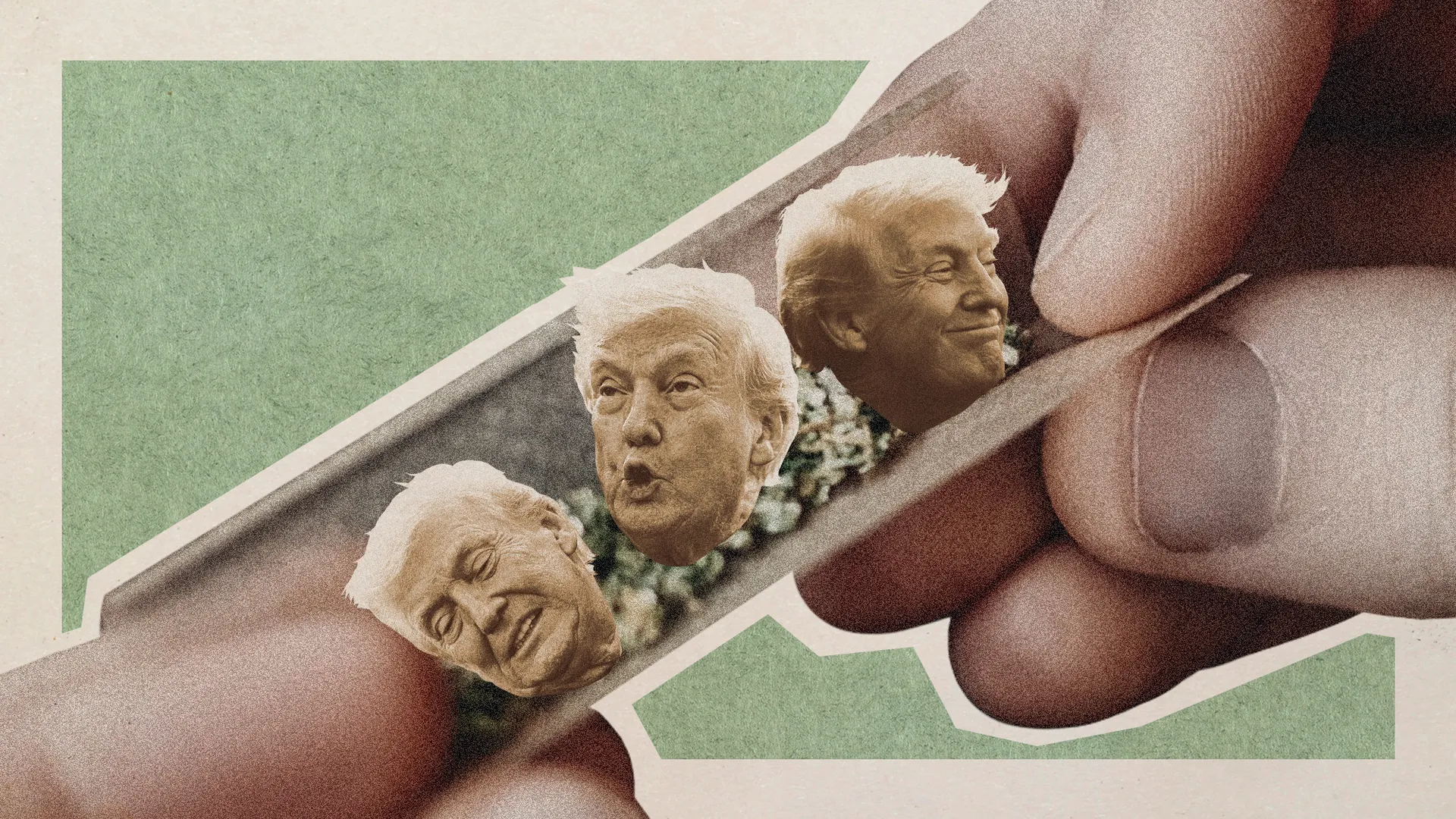
The Republican Party that once gave us the war on drugs and “Just Say No” is getting a little more weed-friendly. President Donald Trump on Thursday signed an executive order to speed the reclassification of marijuana as a less dangerous drug, potentially moving federal policy closer to the decriminalization stance of many states.
Trump’s order is a “major shift in federal drug policy,” said The Associated Press. Under federal rules, marijuana is classified as a Schedule I drug “alongside heroin and LSD.” The president’s move would make weed a Schedule III drug, similar to anabolic steroids. The change to the marijuana classification “would not make it legal for recreational use,” but it could change how the drug is regulated and “open new avenues for medical research.” Many Americans have been “begging for me to do this” to make it easier to alleviate their pain, said Trump.
More than two dozen House Republicans opposed the move, said Fox News. Marijuana reclassification will “enable drug cartels and make our roads more dangerous,” the group said in a letter to the president. Making federal policy more lenient will promote a “dangerous falsehood” that cannabis use is “acceptable and safe.” Trump’s order “does not legalize recreational marijuana use,” a White House spokesperson said in response.
The Week
Escape your echo chamber. Get the facts behind the news, plus analysis from multiple perspectives.
SUBSCRIBE & SAVE
Sign up for The Week's Free Newsletters
Join more than 350,000 subscribers and keep yourself informed with a selection of The Week’s most interesting, enlightening and entertaining stories - plus daily puzzles.
Join more than 350,000 subscribers and keep yourself informed with a selection of The Week’s most interesting, enlightening and entertaining stories - plus daily puzzles.
Latest Videos FromThe Week
“What happened to making America healthy again?” said Allysia Finley at The Wall Street Journal. Marijuana use has become more accepted and widespread in recent years, and Americans are “becoming sicker and dumber as a result.” Studies suggest cannabis users are more likely to experience heart attacks and strokes, and the drug’s effects can be “linked to impaired decision-making and psychosis.” A Trump administration that is taking aim at SSRI antidepressants and even Tylenol now finds itself in a contradiction. It’s the “antithesis of MAGA.”
“Legalize it,” said The Washington Post editorial board. Rather than merely loosen marijuana restrictions somewhat, the better approach is to “legalize pot federally and let states decide if they want to restrict it any further.” Schedule III classification would allow cannabis to be used in “approved, highly regulated medical settings” and solve issues for otherwise-legal marijuana businesses that cannot deduct “operating expenses, such as rent, payroll and marketing,” from their taxes. But it does not resolve other “thorny legal questions.” The best option is to get the federal government out of marijuana enforcement and “let the states sort it out.”
What next?
Trump’s order also “authorizes Medicare to fully cover CBD products for patients,” said Axios. That may help older Americans shift away from “potentially lethal” opiates for pain relief, said the president. Other changes may be slow to materialize. Even with Trump's order, the federal drug reclassification process “can take years," said Axios.
“Not much is changing for consumers” unless Congress changes the federal laws prohibiting marijuana possession, said Reuters. Recreational cannabis use is legal in 24 states, but experts say more states “could be motivated” to legalize the drug following Trump’s executive order.