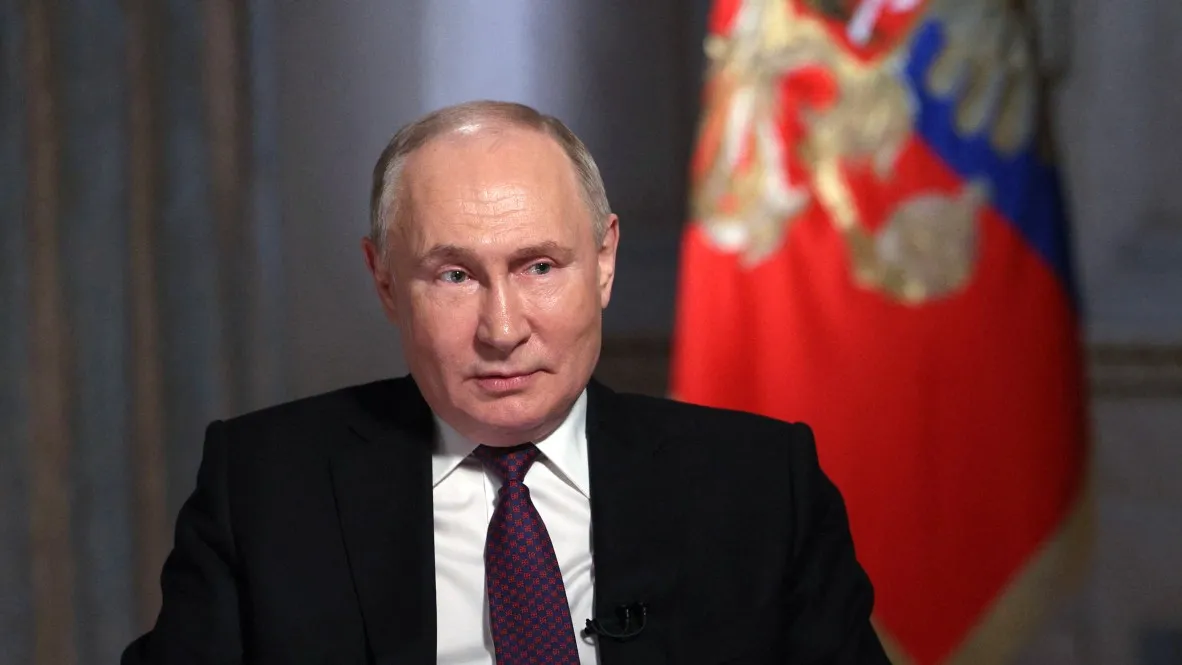
When Vladimir Putin confirmed he would run for re-election, his path to a fifth term as Russia's president seemed a foregone conclusion.
The 71-year-old has ruled either as prime minister or as president since 1999, and is now expected to "easily win a landslide victory" in presidential elections this weekend, said Reuters's Russia correspondent Andrew Osborn. Opinion poll results, while questionable in such a repressive regime, consistently indicate Putin is "supported by a majority of Russians".
But resistance against the autocratic incumbent has been galvanised by the alleged murder of opposition leader Alexei Navalny, whose funeral in Moscow became the focus of widespread protests despite dissent being a punishable offence in Russia.
The Week
Escape your echo chamber. Get the facts behind the news, plus analysis from multiple perspectives.
SUBSCRIBE & SAVE
Sign up for The Week's Free Newsletters
Join more than 350,000 subscribers and keep yourself informed with a selection of The Week’s most interesting, enlightening and entertaining stories - plus daily puzzles.
Join more than 350,000 subscribers and keep yourself informed with a selection of The Week’s most interesting, enlightening and entertaining stories - plus daily puzzles.
Latest Videos FromThe Week US
What is the state of opposition to Putin?
Navalny's widow has urged citizens to take a stand at polling stations at midday on Sunday, and to disavow the election results. "Putin is not a politician, he's a gangster," Yulia Navalnaya wrote in The Washington Post. Refusing to acknowledge him as legitimate leader would be "an important signal to civil society in Russia and the elites still loyal to Putin, as well as to the world, that Russia is ruled not by a president recognised by all".
Yet Russians have few alternatives to Putin as they prepare to cast their votes. A state poll in early March reportedly found that more than 75% of Russians intended to vote for Putin, who is running as an independent candidate after "stamping out the opposition" and "hand-picking" his opponents, said The Moscow Times.
Any remaining figures who could have challenged him are "in prison or exiled abroad", said The Associated Press. Public criticism of his policies have also been "blocked", and the Kremlin "maintains rigid control over the political system and electoral process".
Prior to Navalny's death in an Artic Circle jail last month, former lawmaker Boris Nadezhdin, an outspoken critic of the war on Ukraine, surpassed all expectations when he garnered far more than the 100,000 signatures required to qualify as a candidate for president. But Nadezhdin was disqualified from running by the Central Election Commission (CEC), which claimed many of the signatures were invalid.
Other would-be candidates who have been barred include former TV journalist Yekaterina Duntsova, a lawyer who also opposes the Ukraine war. Her bid was blocked in December over alleged paperwork errors.
Who is still running as a candidate?
Vladislav Davankov, of the New People party, is seen by some as "an alternative candidate for the anti-war electorate", said The Moscow Times. The 40-year-old former businessman has called for "political competition" and previously endorsed Nadezhdin despite his own candidacy. Davankov has also called for "peace and negotiations" with Ukraine, and for an end to "ideological censorship" and persecution of dissent.
According to state-owned polling institution VTsIOM, he is forecast to come second in this week's election, with 6% of the vote.
Third place was expected to go to Nikolai Kharitonov, a member of the State Duma (Russia's lower house of parliament), with 4%. The 75-year-old is running as the official candidate of the Communist Party, "whose candidates have finished a distant second to Putin at every election since 2000", said Osborn on Reuters.
Unlike Davankov, Kharitonov is broadly supportive of Putin and his policies, including what they both call "Russia's special military operation in Ukraine". Kharitonov last ran against Putin in 2004.
Fourth place in the upcoming vote was forecast to go to Leonid Slutsky, leader of the far-right ultranationalist Liberal Democratic Party (LDPR), who is also something of a Kremlin-approved candidate. "I won't take away votes from the president of Russia," Slutsky, 56, told reporters after he was chosen as candidate.
What next?
None of Putin's three rivals for the presidency are seen as a "genuine challenger", said the BBC's Europe editor Paul Kirby.
If Putin wins, he will be eligible to run again in six years, having made constitutional changes that reset term limits – putting him on track to retain power until 2036 and overtake Joseph Stalin as Russia's longest-serving leader.
"The spirit of post-Soviet democratisation is all but dead," said The Guardian. "The flame is kept alive by a courageous few."