Sign up to get Today’s Best Articles in your inbox
Join 350,000+ subscribers and keep yourself informed with a selection of
The Week’s most interesting, enlightening and entertaining stories - plus daily puzzles.
You are now subscribed
Your newsletter sign-up was successful
Want to add more newsletters?
An account already exists for this email address, please log in.
Whistles emerge as Chicago’s tool to fight ICE
As federal agents continue raiding the city, communities have turned to noisemakers to create a warning system
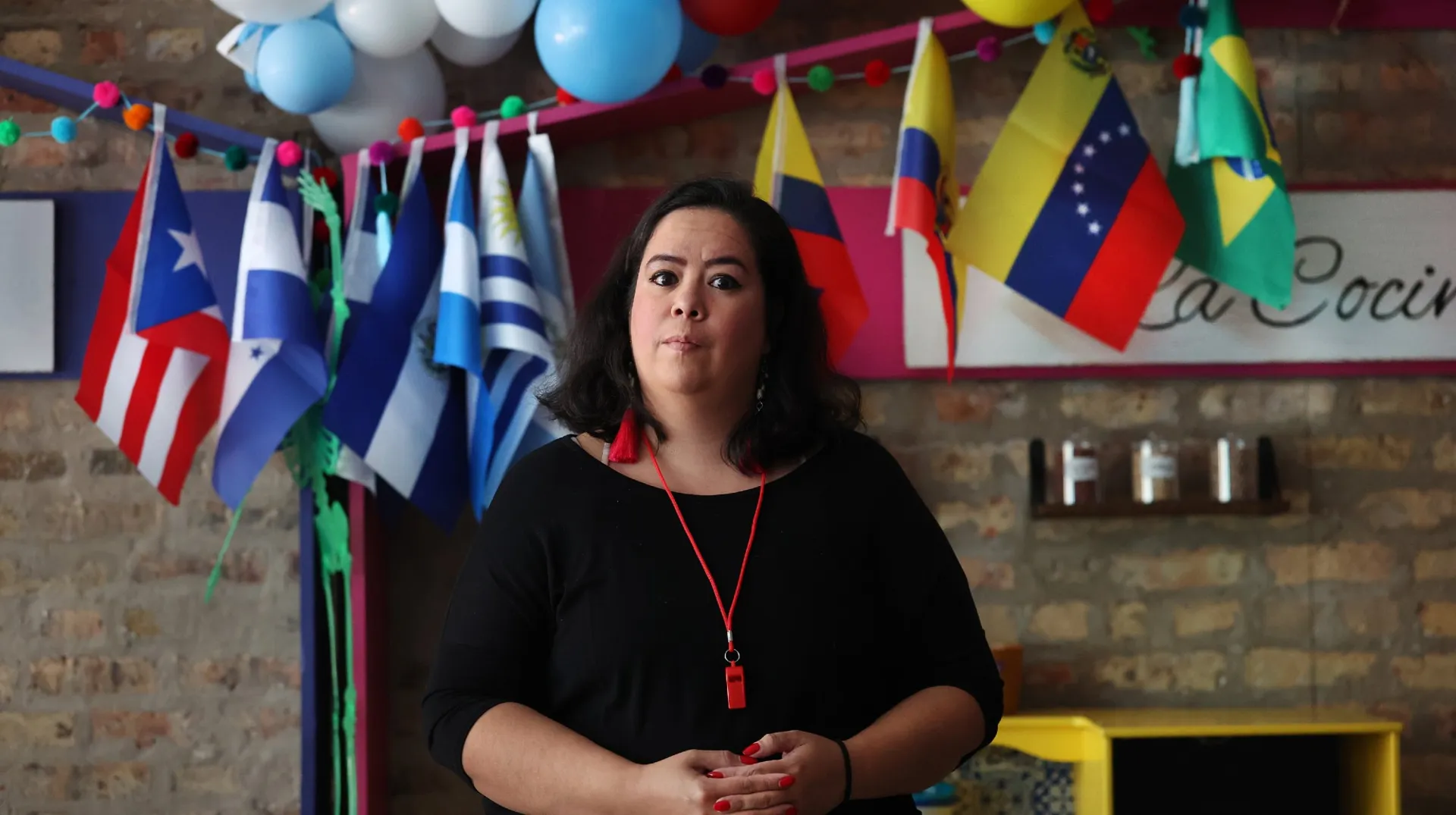
Vanessa Aguirre-Ávalos, owner of Luna y Cielo Play Café in Chicago's Logan Square neighborhood, provides whistles and information to customers for use to protect the community against ICE
(Image credit: Chris Sweda / Chicago Tribune / Tribune News Service / Getty Images)
As President Donald Trump continues to push a militarized occupation of Chicago in the name of the administration’s anti-immigration agenda, residents across the Windy City have seized upon a simple, affordable way to alert their community to impending immigration-related danger: metal and plastic whistles. Chicagoans have turned to small noisemakers as an easy way to share warnings and activate residents when federal agents are in the area. From well-attended “whistlemania” volunteer training events to free handouts in shops throughout the city, whistles are becoming the go-to tool to keep at-risk communities alert.
‘It’s our responsibility to watch out for each other’
Organizers in Chicago have been “sending out the tiny plastic alarm systems by the thousands” and are training activists with a “simple method” to use the noisemakers, said The Wall Street Journal. “Short bursts” notify people that immigration agents are “in the area,” and “one sustained note” announce an “imminent arrest.” The “dual purpose” of these actions is to signal to at-risk populations who could “get swept up in one of the raids to avoid the area” as well as to “attract citizens who want to act as observers” for any immigration arrests.
Activists regard the whistles as a means to “fight back against what many see as overly aggressive immigration arrests,” said Chicago Public Media. Whistle users claim that after sounding an alarm, immigration agents tend to “limit their time in a community or decrease their aggressiveness.” The idea came from local activist Teresa Magaña, who imported the whistle operation “after seeing a video of activists touting their effectiveness in LA.” Since debuting in Chicago in August, whistles have been passed out by the thousands from “coffee shops to bars to adult stores” and at “whistlemania” events. At these, volunteers put together kits that include “‘Know Your Rights’ information, whistles and a zine with instructions on how to use them,” said the Chicago Tribune.
The Week
Escape your echo chamber. Get the facts behind the news, plus analysis from multiple perspectives.
Join more than 350,000 subscribers and keep yourself informed with a selection of The Week’s most interesting, enlightening and entertaining stories - plus daily puzzles.
Join more than 350,000 subscribers and keep yourself informed with a selection of The Week’s most interesting, enlightening and entertaining stories - plus daily puzzles.
“It’s our responsibility to watch out for each other,” said Logan Square whistlemania attendee Mike Delgado to Block Club Chicago. The next round of whistlemania events will likely be “held in the suburbs,” the outlet said.
A broader community safety effort
Although whistles are perhaps the most immediately noticeable element of the grassroots push to counter Immigration and Customs Enforcement, they are not Chicago activists’ only tool. Over the past several weeks of the Trump administration’s ongoing Chicago operations, many residents have launched “volunteer groups to monitor their neighborhoods for federal immigration agents,” sharing alerts across both social media and encrypted messaging apps when agents are spotted, said The New York Times. The city has a “growing number of volunteer groups” who work alongside lawyers, advocates and activists “patrolling the streets of Chicago and its suburbs,” warning migrants of potential ICE raids, as well as “contacting family members of those detained and linking detained immigrants with legal services,” said NPR.
Despite the de-escalation reported by whistle activists, the Department of Homeland Security has downplayed the tactic and its effectiveness. “Agitators aren’t deterring or slowing down law enforcement — we will continue to enforce the rule of law and protect Americans,” said DHS spokesperson Tricia McLaughlin to the Journal. Agents are “not afraid of loud noises and whistles.”
Sign up to get Today’s Best Articles in your inbox
A free daily email with the day’s biggest news and analysis – and the best features from TheWeek.com
Rafi Schwartz has worked as a politics writer at The Week since 2022, where he covers elections, Congress and the White House. He was previously a contributing writer with Mic focusing largely on politics, a senior writer with Splinter News, a staff writer for Fusion's news lab, and the managing editor of Heeb Magazine, a Jewish life and culture publication. Rafi's work has appeared in Rolling Stone, GOOD and The Forward, among others.