
"I have never seen a breach quite like this". That was the damning assessment of Jeffrey Goldberg, editor-in-chief of The Atlantic, after he was accidentally added to a group chat on Signal where top US defence and intelligence officials were discussing confidential war plans to strike Houthi rebels in Yemen.
This major security "botch" will only further stoke concerns that have "repeatedly been raised about intelligence sharing with the US" under Donald Trump's administration, said Sam Blewett at Politico.
What did the commentators say?
Even before Trump's inauguration in January, Washington's intelligence-sharing partners had "began to assess the need to become more reserved about what they can risk sharing with US partners – and what to hold back", said Keir Giles and John Sipher at Foreign Policy. During Trump's first term, the partners had watched with "horror" when he "challenged his own intelligence services, posted a classified photo of an Iranian missile launch site, and eagerly shared secret intelligence with Russian officials".
The Week
Escape your echo chamber. Get the facts behind the news, plus analysis from multiple perspectives.

Sign up for The Week's Free Newsletters
From our morning news briefing to a weekly Good News Newsletter, get the best of The Week delivered directly to your inbox.
From our morning news briefing to a weekly Good News Newsletter, get the best of The Week delivered directly to your inbox.
With Trump's return to the White House, "fears of sharing sensitive information with Washington will have deepened radically" as it "became clear that the US now places a higher value on partnering with the Kremlin" than on the "concerns of its European allies".
Earlier this month, four former British ambassadors to the US voiced concern about the future of intelligence sharing, following Trump's re-election. One, Sir David Manning, who was ambassador between 2003 and 2007, told a parliamentary committee that some Trump appointees had "strange track records" which would create a "problem on the intelligence front".
In the US, Democrats and even some Republicans have expressed anger and outrage at the latest security breach but, for Keir Starmer, "concern may go deeper than the Signal conversation over the Houthi war plan", said Simon Marks in The i Paper. It is as yet "unknown how many similar conversations about classified operations may have already taken place via insecure technology that is not government-approved, and how many of the West's enemies may have found ways of snooping on them".
What next?
US National Security Adviser Mike Waltz, who invited Goldberg to join the Signal chat, "probably ought to resign", said Freddy Gray in The Spectator, and there is already a "furious discussion inside the White House" that he "may need to be forced out", said Politico.
But there remains the much bigger question about the future of Western intelligence sharing, particularly the "Five Eyes" arrangement that the US has with the UK, Canada, Australia and New Zealand.
It is "part of the web of cooperation among Washington and its friends that has long underpinned US and Western security", said Foreign Policy. But now, the other four nations would be "entirely justified to wonder just how secure their intelligence can be in the hands of US officials" who not only shared top-secret military plans on Signal but also included "one of America's leading journalists", said The i Paper.
The strongest relationship within Five Eyes has always been the one between the US and UK. The way that these long-standing allies help each other is "unique", Dame Karen Pierce, who stepped down as ambassador to the US in February, told the parliamentary committee last month. So, intelligence sharing would continue, "even if, at the top level, there might be things we might wish to be a bit circumspect about".
-
 Political cartoons for January 10
Cartoons Saturday’s political cartoons include a warning shot, a shakedown, and more
-
 Courgette and leek ijeh (Arabic frittata) recipe
The Week Recommends Soft leeks, tender courgette, and fragrant spices make a crisp frittata
-
 Trump’s power grab: the start of a new world order?
Talking Point Following the capture of Nicolás Maduro, the US president has shown that arguably power, not ‘international law’, is the ultimate guarantor of security


-
 New START: the final US-Russia nuclear treaty about to expire
The Explainer The last agreement between Washington and Moscow expires within weeks
-
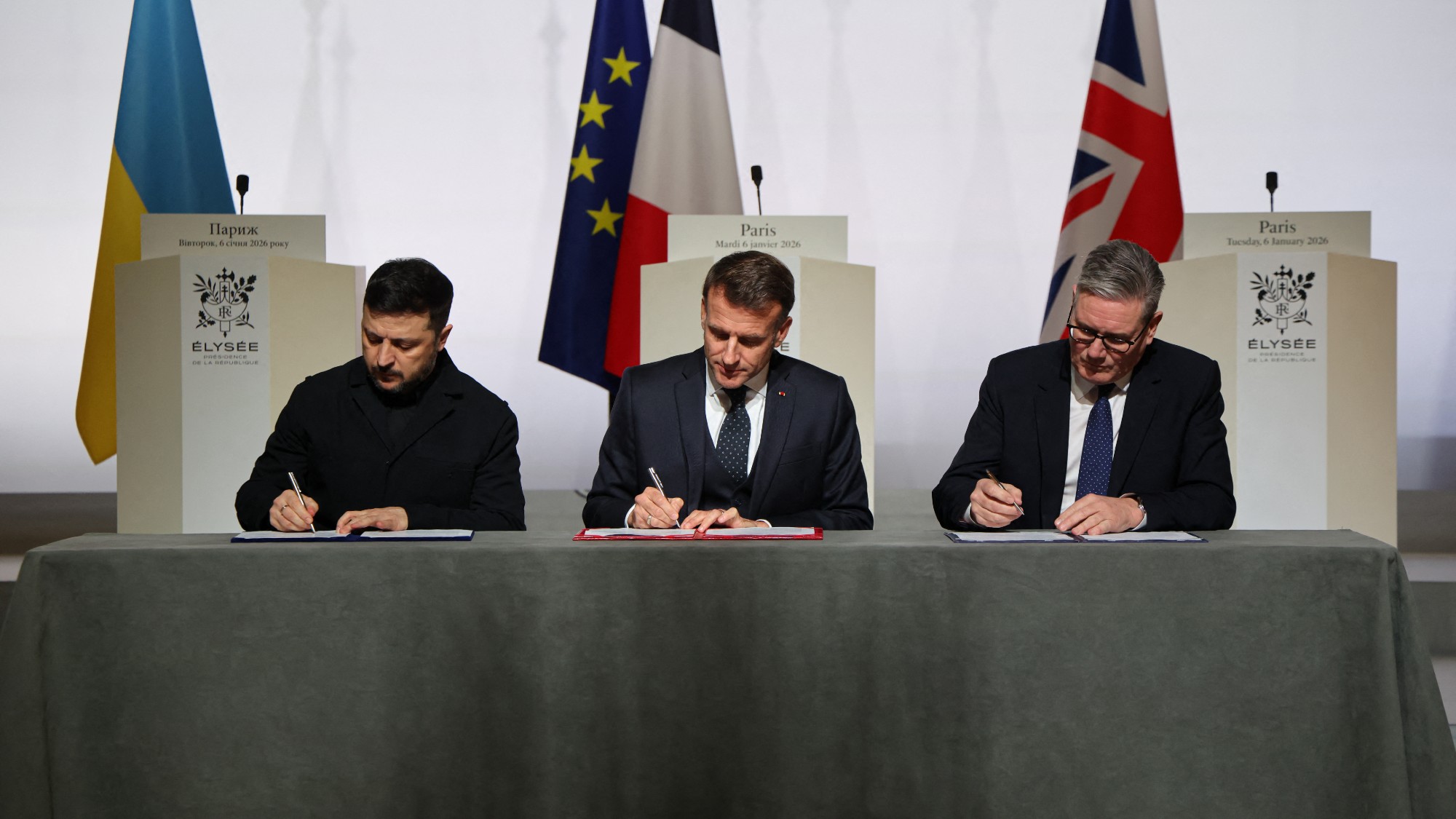 What would a UK deployment to Ukraine look like?
Today's Big Question Security agreement commits British and French forces in event of ceasefire
-
 Would Europe defend Greenland from US aggression?
Today’s Big Question ‘Mildness’ of EU pushback against Trump provocation ‘illustrates the bind Europe finds itself in’
-
 Greenland, Colombia, Cuba: where is Donald Trump eyeing up next?
Today's Big Question Ousting Venezuela’s leader could embolden the US administration to exert its dominance elsewhere
-
 Did Trump just end the US-Europe alliance?
Today's Big Question New US national security policy drops ‘grenade’ on Europe and should serve as ‘the mother of all wake-up calls’
-
 Trump peace deal: an offer Zelenskyy can’t refuse?
Today’s Big Question ‘Unpalatable’ US plan may strengthen embattled Ukrainian president at home
-
 Vladimir Putin’s ‘nuclear tsunami’ missile
The Explainer Russian president has boasted that there is no way to intercept the new weapon
-
 Why did the China spying case collapse?
Today’s Big Question Unwillingness to call China an ‘enemy’ apparently scuppered espionage trial


